

- …
- …
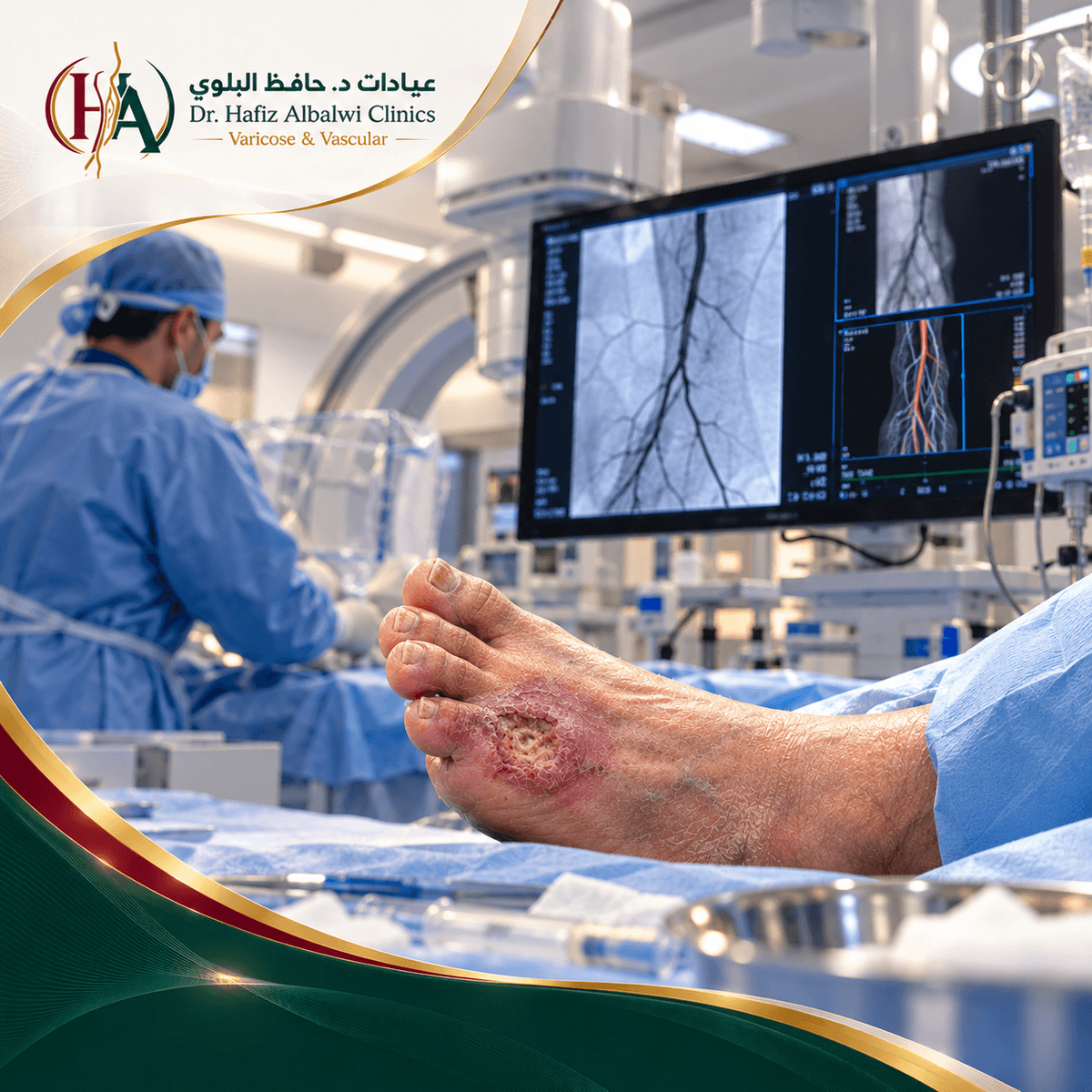
Diabetic Foot Ulcer and Gangrene Treatment in Jeddah
Saving foot tissue begins with assessing blood circulation and treating arterial blockages when necessary, using minimally invasive endovascular procedures without open surgery in suitable cases.
What Is Diabetic Foot?
Diabetic foot is a complication of diabetes that may present as non-healing wounds, recurrent infections, or changes in skin color.
The condition may worsen when blood flow is reduced due to narrowing or blockage of the arteries supplying the leg and foot.
What Causes Diabetic Foot Ulcers to Heal Slowly?
- Poor blood circulation due to arterial blockages.
- Diabetic neuropathy and loss of sensation.
- Bacterial infections.
- High blood sugar levels.
- Repeated pressure on wound areas.
Endovascular Treatment of Arterial Blockages in Diabetic Foot
Dr. Hafiz Albalwi in Jeddah provides specialized assessment of lower limb arteries, with minimally invasive endovascular treatment of arterial narrowing or blockages in suitable cases.
The procedure involves balloon angioplasty, with stent placement when necessary, to improve blood flow to the foot tissues and support wound healing.
Not all diabetic foot ulcers require endovascular intervention. The decision depends on blood circulation assessment and the condition of the wound.
When Does a Diabetic Foot Patient Need Arterial Assessment?
- Non-healing or slow-healing wounds.
- Foot pain at rest, particularly at night.
- Cold feet or changes in skin color.
- Blackened areas or signs of gangrene.
- Weak foot pulses.
- Foot ulcers with suspected poor blood circulation.
Can Gangrene Be Treated Without Amputation?
Not every diabetic foot ulcer or case of gangrene requires amputation.
The decision depends on the extent of tissue damage, the presence of infection, and the condition of the arteries.
Restoring blood flow through endovascular treatment may promote wound healing and preserve viable tissue. However, it cannot restore dead tissue or guarantee that amputation will be avoided in every case.
Patients may also require wound debridement, removal of dead tissue, and infection management in collaboration with relevant medical specialists.
How Is Poor Blood Circulation in the Foot Diagnosed?
Assessment begins with a clinical examination and may include:
- Examination of foot pulses.
- Measurement of blood perfusion parameters.
- Arterial Doppler ultrasound.
- CT angiography or catheter angiography when necessary.
Benefits of Endovascular Treatment for Leg Arteries
- Minimally invasive procedure compared with open surgery.
- Ability to widen selected narrowed or blocked arteries.
- Improved blood flow to the foot following successful treatment.
- Improved chances of wound healing in suitable cases.
- Potential to avoid certain open surgical procedures.
When Is Diabetic Foot a Medical Emergency?
If you notice new black discoloration of the toes, rapidly spreading redness, pus discharge accompanied by fever, or deterioration in your general health, seek emergency medical care immediately rather than waiting for a clinic appointment.
Why Choose Dr. Hafiz Albalwi Clinics?
Dr. Hafiz Albalwi, Consultant Vascular and Endovascular Surgeon, with French Board certification and a PhD, provides specialized assessment of poor blood circulation and lower limb arterial blockages, with individualized treatment recommendations for each patient.
Book Your Diabetic Foot Vascular Assessment in Jeddah
If you have a non-healing wound or poor blood circulation in your foot, early vascular assessment can help identify the underlying cause and determine appropriate treatment options.
Shop Diabetic Foot Care Products