
- …
- …
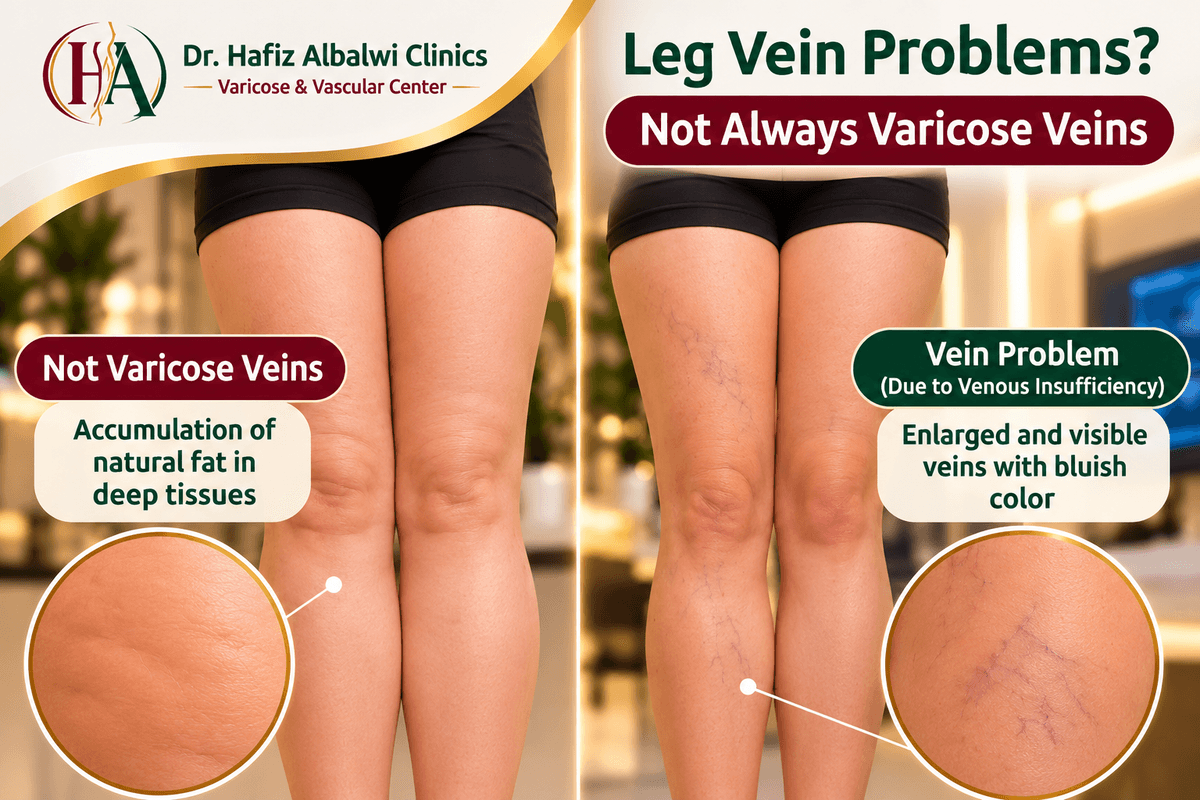
Lipedema or Varicose Veins? Understanding the Difference
What Is Really Causing Your Leg Swelling?
Leg swelling, heaviness, and pain may be caused by varicose veins, venous reflux, or lipedema.
However, not every case of swollen legs is caused by lipedema or chronic venous insufficiency. Identifying the underlying cause is essential before choosing treatment.
What Is Lipedema?
Lipedema is a chronic condition characterized by an abnormal accumulation of fatty tissue, usually affecting both legs symmetrically.
It may cause tenderness, pain when touched, and easy bruising.
Its symptoms can overlap with other medical conditions, making proper clinical assessment important before confirming the diagnosis.
Does Every Case of Leg Swelling Mean Lipedema?
No. One common misconception is that any enlargement or swelling of the legs indicates lipedema.
Leg swelling can have several causes, including:
- Varicose veins and venous reflux.
- Chronic venous insufficiency.
- Lipedema.
- Lymphedema.
- Certain medications and heart, kidney, or liver conditions.
- Other medical conditions requiring evaluation.
Identifying the cause of swelling is the first step toward choosing the right treatment.
Lipedema vs. Chronic Venous Insufficiency: What Is the Difference?
Both conditions may cause leg heaviness and discomfort, but their underlying mechanisms differ.
Lipedema
- Involves abnormal distribution and accumulation of fatty tissue.
- Usually affects both legs symmetrically.
- May cause tenderness and pain with pressure.
- Often causes easy bruising.
- Typically spares the feet unless another condition is also present.
- Leg enlargement is often persistent rather than fluctuating significantly throughout the day.
Chronic Venous Insufficiency (Venous Reflux)
- Occurs when venous valves do not function properly, allowing blood to flow backward.
- May affect one or both legs.
- Can cause swelling, visible varicose veins, and heaviness.
- Swelling may extend to the ankles and feet.
- Venous Doppler ultrasound helps identify abnormal reflux.
- Swelling often increases toward the end of the day.
Can Varicose Veins Cause Swelling Similar to Lipedema?
Yes. Chronic venous insufficiency can cause leg swelling, heaviness, and pain that may resemble some symptoms reported by patients with lipedema.
When venous valves fail to function properly, blood can flow backward, increasing pressure inside the veins.
This may cause fluid to accumulate in the surrounding tissues.
Symptoms can become worse after prolonged standing and may improve with leg elevation.
How Can I Tell Whether My Leg Swelling Is Caused by Lipedema or Venous Insufficiency?
Diagnosis depends on medical history, physical examination, and appropriate investigations.
A Venous Duplex Ultrasound may be used to assess:
- Reflux in superficial and deep veins.
- Venous valve function.
- Varicose veins associated with swelling.
- Signs of venous obstruction when suspected.
Doppler ultrasound does not confirm or exclude lipedema on its own. However, it helps identify associated venous conditions that may require treatment.
Can Leg Swelling Be Treated If It Is Caused by Venous Insufficiency?
Yes. Treatment options are available for chronic venous insufficiency and varicose veins.
The appropriate treatment depends on the venous ultrasound findings and the severity of symptoms.
Options may include:
- Medical compression stockings.
- Lifestyle and activity modifications.
- Endovenous Laser Treatment (EVLT).
- ClariVein treatment.
- Sclerotherapy for suitable veins.
Treating venous insufficiency may reduce swelling and related symptoms, but it does not directly eliminate the abnormal fatty tissue associated with lipedema.
Can Lipedema and Varicose Veins Occur Together?
Yes. Both conditions can coexist.
Therefore, diagnosing lipedema does not mean that venous assessment should be overlooked, particularly when visible varicose veins, swelling, or symptoms that worsen with standing are present.
هل يمكن أن تكون لدي ليبيديما ودوالي الساقين معًا؟
نعم، يمكن أن تجتمع الحالتان.
ولهذا فإن تشخيص الليبيديما لا يعني تجاهل تقييم الأوردة، خاصة عند وجود تورم واضح في الكاحلين أو دوالي ظاهرة أو تغيرات جلدية أو أعراض تزداد مع الوقوف.
When Should You See a Vascular Specialist?
A vascular assessment is recommended when you experience:
- Recurrent or persistent leg swelling.
- Visible or prominent varicose veins.
- Leg heaviness or pain after prolonged standing.
- Increasing swelling toward the end of the day.
- Skin discoloration around the ankles.
- Recurrent skin wounds or ulcers.
Important: Sudden swelling in one leg, particularly when accompanied by significant pain or redness, requires urgent medical assessment to exclude deep vein thrombosis. Sudden shortness of breath or chest pain requires emergency care.
Can Doppler Ultrasound Diagnose Lipedema?
No. Doppler ultrasound is not used as the sole diagnostic test for lipedema.
However, it is valuable when venous reflux or obstruction is suspected.
Are Compression Stockings Helpful for Lipedema and Venous Insufficiency?
No. Leg shape or size alone is not sufficient to diagnose lipedema.
Symptoms, clinical examination, and other possible causes must be considered.
Leg Swelling and Venous Insufficiency Diagnosis in Jeddah
If you suspect you have lipedema or experience leg swelling and heaviness, a venous circulation assessment may be an important step in identifying underlying venous insufficiency or associated varicose veins.
Dr. Hafiz Albalwi, Consultant Vascular and Endovascular Surgeon, with French Board certification and a PhD, provides specialized assessment of venous disorders and leg swelling, determining the need for Doppler ultrasound and appropriate venous treatment options.
Learn More: Varicose Vein Treatment in Jeddah