- …
- …

Vaginal, Vulvar and Pelvic Varicose Veins Treatment in Jeddah
Minimally Invasive Treatment Options for Vulvar, Vaginal and Pelvic Varicose Veins
Do you have prominent veins around the vulva, persistent pelvic pain, or a feeling of heaviness in the pelvis?
These symptoms may sometimes be associated with vulvar or pelvic varicose veins. Depending on the location and cause of the abnormal veins, selected cases can be treated with sclerotherapy or catheter-based embolization, without traditional open surgery.
At Dr. Hafiz Albalwi Clinics in Jeddah, we focus on identifying the underlying cause and choosing the most appropriate treatment for each patient.

What Do Vulvar and Vaginal Varicose Veins Look Like?
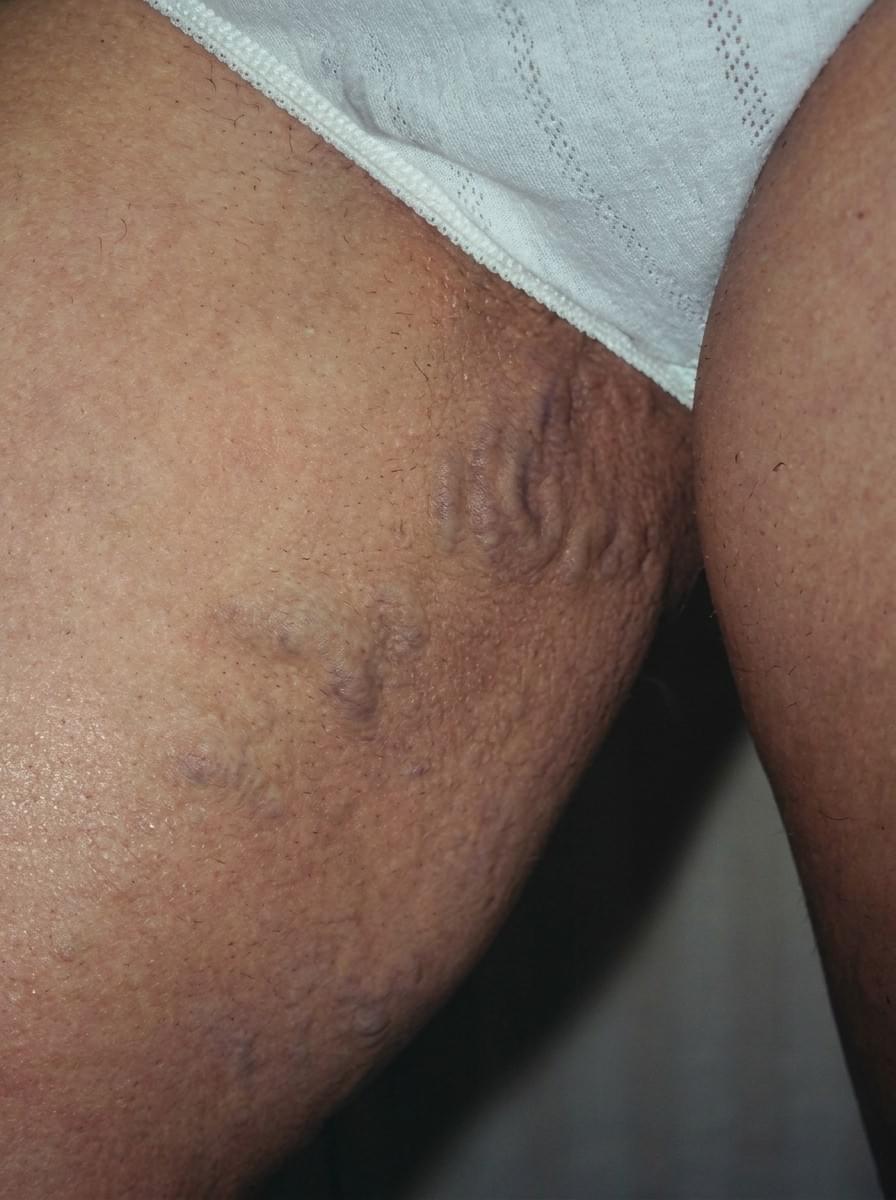
Vulvar varicose veins may appear as enlarged, twisted, blue or purple veins around the external genital area. They can extend toward the upper inner thighs or the area surrounding the vaginal opening.
These veins may cause discomfort, heaviness, or pain, particularly after prolonged standing or during pregnancy.
In some women, abnormal veins are located deeper within the pelvis and may not be visible externally.
A specialist assessment and appropriate imaging help identify the source of venous reflux and determine the most suitable treatment.
What Are Vulvar, Vaginal and Pelvic Varicose Veins?
Vulvar varicose veins are enlarged veins affecting the external genital area, including the labia.
They may appear as visible veins or cause symptoms such as heaviness, swelling, or discomfort.
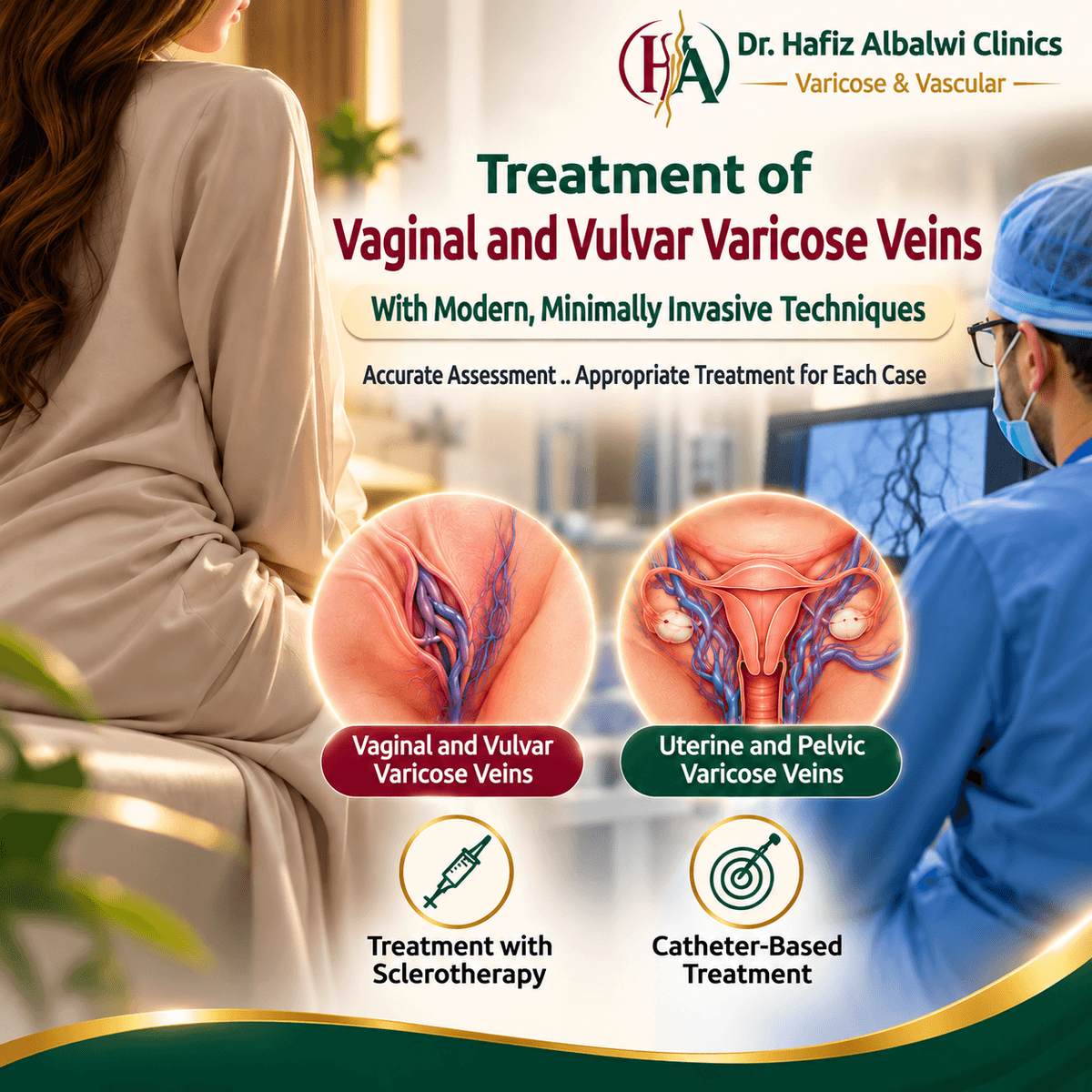
Pelvic varicose veins involve enlarged veins deeper within the pelvis, including veins around the uterus and ovaries. In some women, these veins are associated with pelvic venous disorders and chronic pelvic pain.
Although these conditions can be related, they are not identical, and their treatment depends on the location and source of the abnormal venous flow.
Symptoms of Vulvar and Pelvic Varicose Veins
Symptoms vary from one patient to another. Some women experience only visible veins, while others may develop:
- Swelling or enlarged veins around the vulva or labia.
- A feeling of heaviness or pressure in the genital area.
- Pelvic discomfort or pain after prolonged standing.
- Pain during or after sexual intercourse.
- Increased pelvic discomfort before menstruation in some cases.
- Visible veins extending toward the upper inner thighs or groin.
Not all pelvic pain is caused by varicose veins. Other gynecological, urinary, gastrointestinal, and musculoskeletal conditions may produce similar symptoms.
Are Vulvar and Pelvic Varicose Veins Dangerous?
These veins are not usually dangerous, but persistent or worsening symptoms should be evaluated.
Some women have visible veins without significant discomfort and may not require treatment.
In other cases, ongoing pelvic pain, swelling, or venous reflux may justify further investigation.
Important: Sudden severe pelvic pain, significant bleeding, or other acute symptoms require prompt medical assessment rather than assuming they are caused by varicose veins.
Can Vulvar and Pelvic Varicose Veins Be Treated Without Surgery?
Yes. Many appropriately selected cases can be managed without traditional open surgery.
Treatment options may include:
- Sclerotherapy for suitable superficial vulvar veins.
- Catheter-based embolization for selected abnormal pelvic veins.
- Conservative measures and symptom management when intervention is unnecessary.
The choice depends on the venous anatomy, symptoms, imaging findings, and source of reflux.
Sclerotherapy for Vulvar Varicose Veins
Do you have visible veins around the vulva that cause discomfort or affect your confidence?
Sclerotherapy may be suitable for selected superficial varicose veins.
The treatment involves injecting a specialized medical solution into the affected vein to encourage its closure. The treated vein gradually becomes less prominent over time.
However, when superficial veins are connected to deeper pelvic venous reflux, treating only the visible veins may not address the underlying problem.
For this reason, identifying the source of reflux is essential before selecting treatment.
Pelvic Vein Embolization for Uterine and Pelvic Varicose Veins
Do you experience persistent lower abdominal or pelvic heaviness, particularly after prolonged standing or sexual intercourse?
In selected women, these symptoms may be associated with enlarged pelvic veins and abnormal venous reflux.
Pelvic vein embolization is a minimally invasive, catheter-based treatment designed to close the abnormal veins contributing to venous congestion.
A thin catheter is introduced through a vein, commonly in the groin or arm. Under imaging guidance, the physician reaches the affected pelvic veins and uses appropriate embolization materials to block the abnormal venous pathways.
Not all pelvic varicose veins require embolization. The decision depends on symptoms, clinical evaluation, and imaging findings.
What Is the Difference Between Sclerotherapy and Embolization?
Both techniques aim to treat abnormal veins, but they are used in different situations.
Sclerotherapy
- Often used for suitable superficial veins.
- Involves injecting a medical solution into the affected vein.
- May be appropriate for selected visible vulvar varicose veins.
Catheter-Based Embolization
- Used for selected abnormal veins located deeper within the pelvis.
- Involves introducing a catheter through the venous system.
- Targets pelvic venous reflux when it is identified as a relevant cause of symptoms.
Which treatment is right for you?
The most appropriate option depends on the source of the varicose veins, the presence of pelvic reflux, and your individual symptoms.
How Are Vulvar and Pelvic Varicose Veins Diagnosed?
- Diagnosis begins with a detailed medical history and physical examination.
Depending on the symptoms, the evaluation may include:
- Doppler ultrasound of the relevant veins.
- Transvaginal or transabdominal pelvic ultrasound when appropriate.
- MRI or CT imaging in selected cases.
- Catheter venography when planning certain interventions.
The aim is to identify the source of abnormal venous flow and avoid unnecessary procedures.
- At Dr. Hafiz Albalwi Clinics in Jeddah, we assess the venous anatomy and discuss treatment options according to each patient's condition.
Why Choose Dr. Hafiz Albalwi Clinics in Jeddah?
If you are experiencing vulvar varicose veins, recurrent pelvic discomfort, or persistent heaviness, identifying the cause is the first step toward appropriate treatment.
At Dr. Hafiz Albalwi Clinics, care is provided by a Consultant Vascular and Endovascular Surgeon with French Board certification and a PhD, with experience in vascular and catheter-based interventions.
Our approach focuses on:
- Identifying the underlying source of venous reflux.
- Selecting treatment according to the patient's symptoms and imaging.
- Considering minimally invasive options when appropriate.
- Avoiding unnecessary procedures.
- Providing individualized follow-up.
Can Vulvar Varicose Veins Develop During Pregnancy?
Yes. Vulvar varicose veins can appear during pregnancy because of hormonal changes, increased blood volume, and pressure on pelvic veins.
In many women, these veins improve after delivery.
However, persistent prominent veins or pelvic symptoms after pregnancy may require further evaluation to identify possible pelvic venous reflux.
Treatment decisions during pregnancy require special consideration, and elective interventions are generally deferred unless medically indicated.
Can Pelvic Varicose Veins Cause Pain?
Yes. In selected patients, pelvic venous disorders may contribute to chronic pelvic pain, heaviness, or discomfort, particularly after prolonged standing or sexual intercourse.
However, pelvic pain has many possible causes.
A diagnosis should not be based on the presence of enlarged veins alone. Clinical assessment and appropriate investigations are needed to determine whether the veins are responsible for the symptoms.
Does Catheter-Based Treatment Require General Anesthesia?
Many pelvic venous embolization procedures can be performed using local anesthesia with sedation when appropriate.
Anesthesia requirements depend on the planned procedure, the patient's medical condition, and the treating team's assessment.
What Do Patients Experience After Treatment?
Recovery varies according to the procedure and the individual case.
Some patients experience temporary discomfort after sclerotherapy or embolization. Visible veins may gradually become less prominent, and pelvic symptoms may improve over time.
Follow-up is important to assess the response to treatment and determine whether additional care is required.
Book a Consultation for Vulvar and Pelvic Varicose Veins in Jeddah